01
Vacuum check
Pull a vacuum on the sealed, empty housing and hold it, to confirm the O-rings are seated before any water is involved.

Subsea enclosure & pressure vessel guide
For a one-off demonstration, an enclosure only has to keep water out for an afternoon. A research payload that goes back in the water every few weeks is a different job: depth rating, material, seal compound and internal layout decide whether a season of data survives the hardware it was collected with. This guide covers enclosure and pressure vessel selection for ROV-mounted and fixed sensor payloads, from the tube material to testing before deployment.
Housing and end-cap material
Start with the tube, and with how often it will be deployed as well as how deep. An acrylic pressure vessel tube is machined from cast PMMA, so you can see straight through the wall. Its depth rating falls as diameter and length grow, from roughly 250 m for the smallest sizes to about 20 m for the largest. An aluminium tube is opaque but rated to 1,000 m at every size. It also stands up better to UV and to the solvents used to clean off fouling, and it conducts heat away from any computer inside.
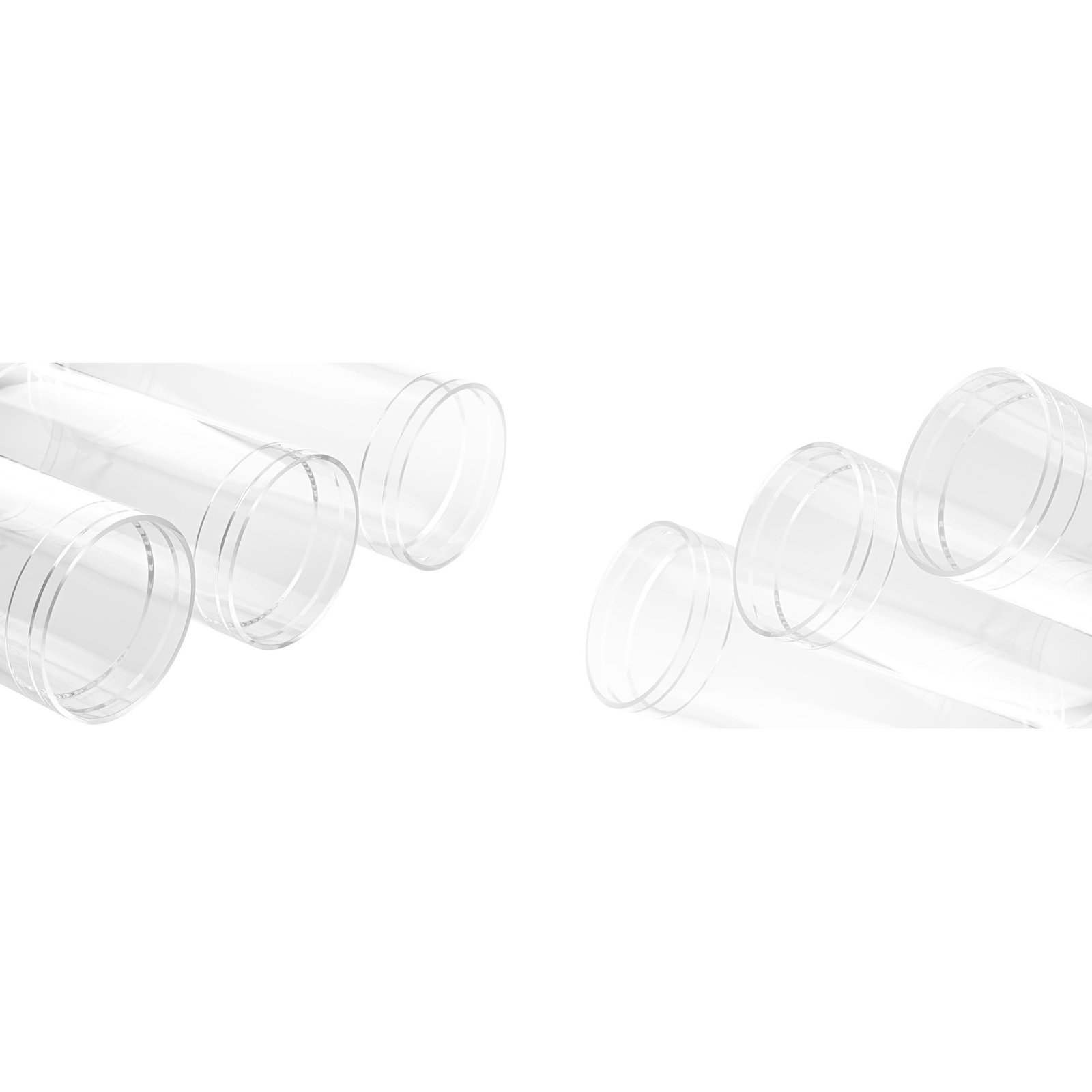
The end cap depends on whether the payload needs to see out. A camera, a light sensor or any optical instrument needs a window. An acrylic end cap is a cheap option for shallow, short jobs, but tightening against the same acrylic face again and again can dent or crack it, so use it where the housing is rarely opened. For wide-angle or gimballed cameras, a domed polycarbonate end cap moulded in a cleanroom gives less image distortion and less drag than a flat window. Where you need good optics and will open the housing often, an optical glass flange end cap combines a hardened borosilicate window (about 95% light transmittance) with an aluminium flange that survives many more service cycles than acrylic.
If nothing inside needs to see out (a data logger, a CTD string, a hydrophone array), fit a blank cap and save the cost of a window. An aluminium end cap comes blank or pre-drilled with M8 or M10 holes, so several sensor and cable runs can pass through one cap. Where low weight and corrosion resistance matter more than depth, a moulded polymer flange end cap combines flange and cap in one glass-filled nylon part for shallow, calm-water work. Every cap seats against an aluminium flange, and the double O-ring groove in that flange is what seals the tube to the cap.
How the tube mounts to the frame also depends on the material. Hold an acrylic tube with a purpose-made acrylic clamp set; clamping it straight onto a rail, time after time, stresses the thinner wall until it cracks. An aluminium tube can take a rigid mount, and bolts to an aluminium mounting plate that fits the Arca-Swiss rails already common on ROV frames.
Seals and cable entry
On a deployment that lasts months, the O-ring compound matters. Static face seals on flanges and end caps are usually NBR70 (nitrile), a cheap general-purpose compound for fresh water and moderate temperatures. NBR swells and breaks down faster than FKM (fluoroelastomer) in long saltwater immersion, in sunlight between deployments and in contact with fouling-removal solvents. Bulkhead seals on penetrator threads get handled more than any other seal on the housing, and are usually FKM75 for that reason. Before a programme of several months, order a spare O-ring set for your exact flange, end-cap and bulkhead sizes, and fit new rings at every service. A ring that has been compressed once never fully recovers its cross-section, so it seals with less margin the second time than it appears to.
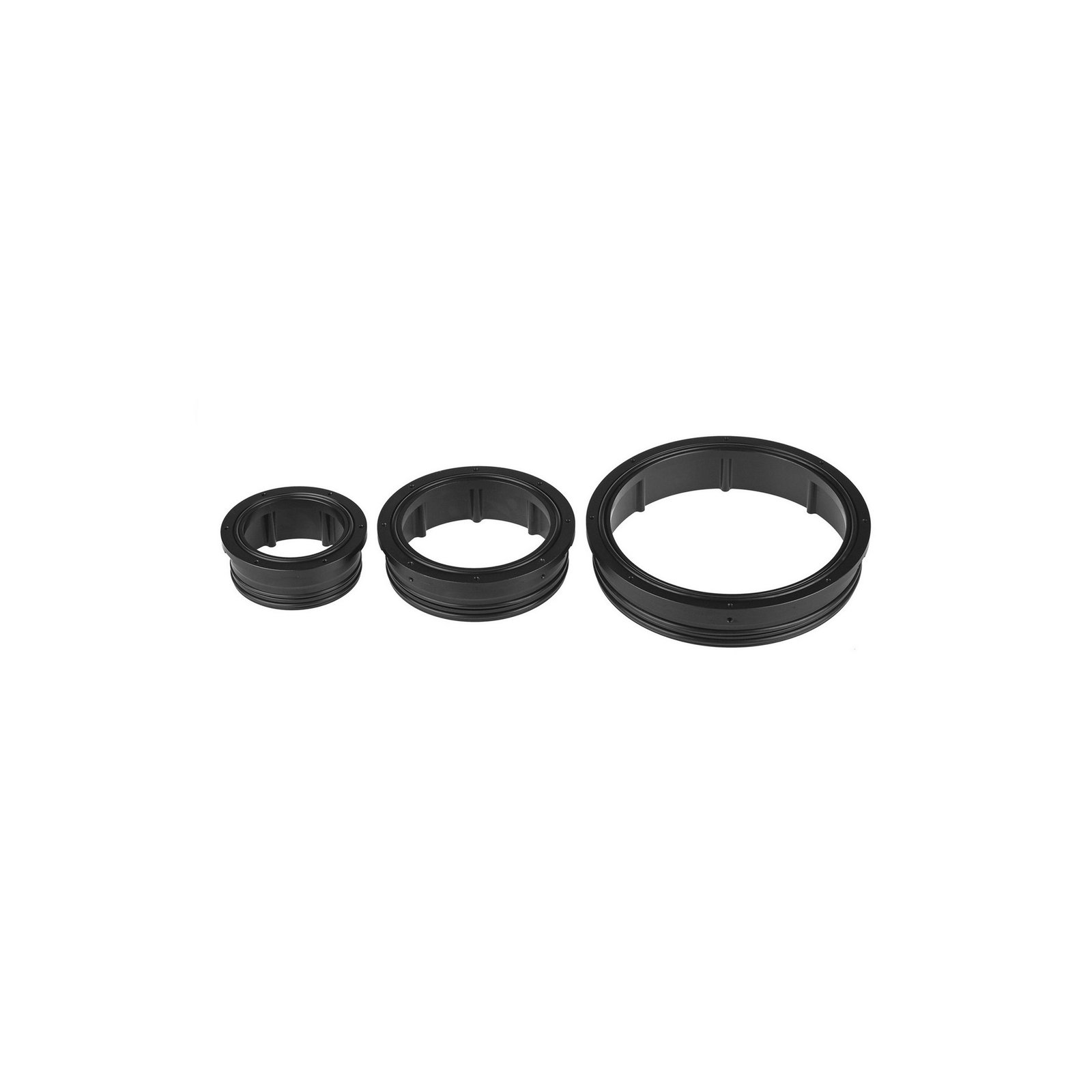
Gland cable penetrators are the other common leak, and the cause is nearly always a gland sized for the wrong cable. A compression gland has to close on the jacket diameter of the cable you are fitting, which is often different from the one on the last harness. The deep-sea M10 gland penetrator comes in six sizes and is rated to 300 m in aluminium or 1,000 m in stainless steel. The mid-depth M8 gland is slimmer, for tightly spaced bulkheads on small payload boxes. For shallow freshwater trials where cost and weight matter more than depth, the low-depth M10 gland has a brass body rated to 100 m. Whichever you use, measure the cable jacket with callipers before ordering. A gland closed on a cable that is too thin leaks around the jacket, and one forced over a cable that is too thick overstresses the seal and wears it out early.
Validation before deployment
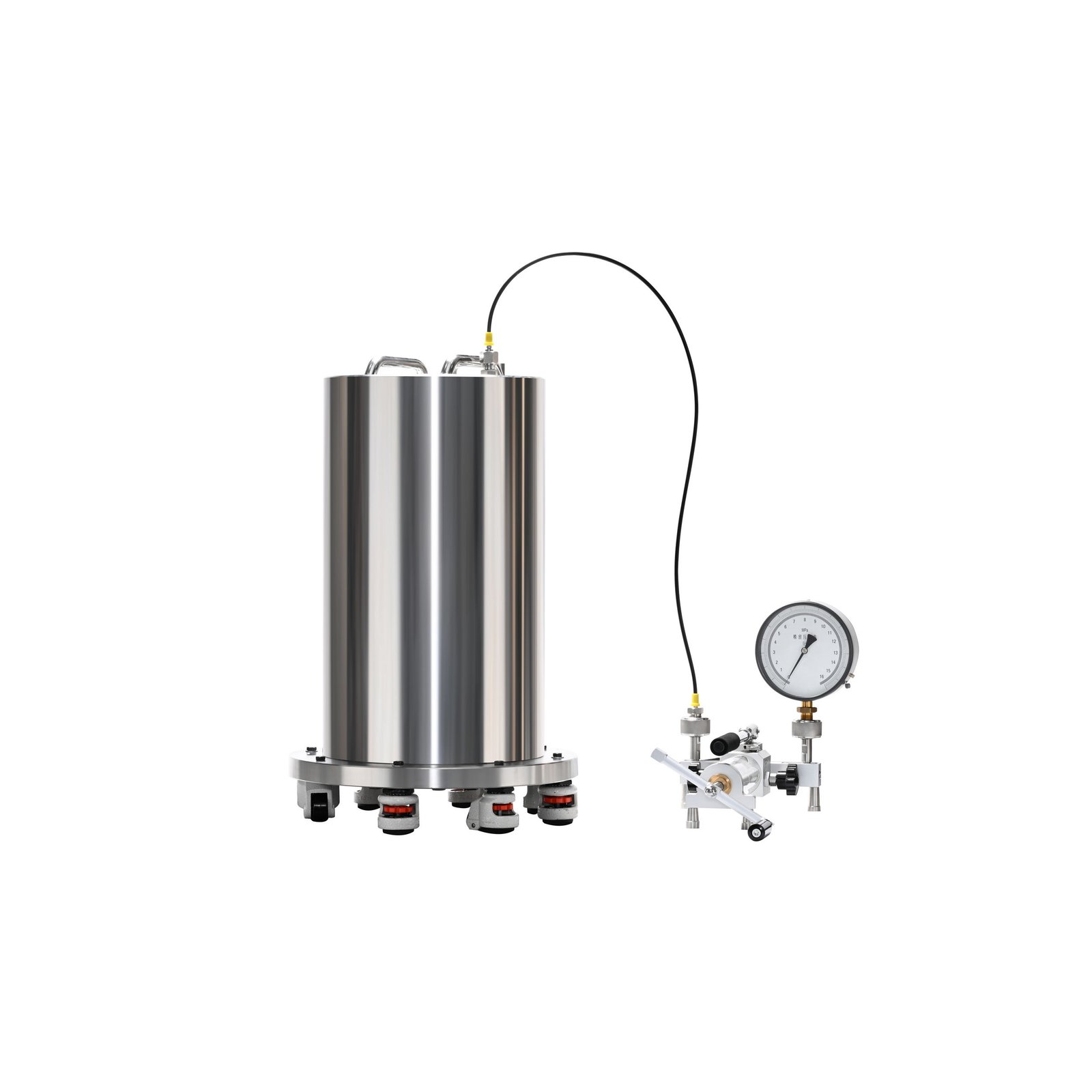
Until a pressure vessel has been pressurised, you are only assuming it works. Labs that deploy repeatedly get better results when pressure testing is a routine step before every cruise, and not a one-off check when the housing is new. A bulkhead pressure testing tube checks a single threaded seal, penetrator or plug on its own: the part screws into one end of a clear acrylic fixture, the fixture is pressurised in a chamber, and afterwards you can see at a glance whether water got in. That way a leak is found before the part goes into a full enclosure, where it is harder to trace. To test a complete enclosure with its cables and connectors fitted, a water pressure testing chamber rated to 10 MPa (about 1,000 m) has an 18-port hatch cover for passing live cables through, so the whole assembly is loaded the way it will be at sea.
01
Pull a vacuum on the sealed, empty housing and hold it, to confirm the O-rings are seated before any water is involved.
02
Hold the housing at or above its rated depth for a fixed soak time in the chamber. A brief spike to the target pressure proves little.
03
Pressurise and release several times for seals and penetrators that will see many deployments. One good hold says nothing about fatigue.
04
Open the housing and check the O-ring seats, the desiccant and any acrylic parts for moisture, dents or stress marks before it goes to the field.
Payload layout
With the housing and seals decided, the inside still has to hold the electronics still through vibration and handling, without touching the bore or crowding the O-ring grooves at each end. An electronic tray set gives multi-board payloads shelves sized to the tube's bore, with pre-tapped mounting holes, so nobody drills in the field and leaves swarf inside a sealed housing. Where one insulated deck is enough, such as a controller board and a small breakout, an insulated PCB shelf gives double-sided insulated mounting space and is handy as a layout template while you design. For parts too big or awkward for trays and shelves, single-point shelf supports fit around them and take less room than the double-point tray.
Longer payloads outgrow one tube quickly: several loggers, a hydrophone array, or a battery pack sharing a housing with a computer. A tube coupling joins two 115 mm tube sections and adds sixteen radial M10 ports of its own, which moves cable entries away from crowded end caps. If the payload is built around a computer such as a Jetson or Raspberry Pi, a rectangular watertight enclosure box is easier to fill with several boards and connectors in fixed positions than a cylinder.
Sources & basis
Published 7 August 2026. Last revised 16 August 2026. Corrections to sales@
Need help with the specification?
It is cheaper to get the specification right before anything is machined and before O-rings arrive in the wrong compound. We supply the Blu-Sub enclosures in this guide and can check depth rating, seal compound, gland sizes and internal fit against your payload before you order.