
Engineering service
Embedded systems integration
Bringing electronics, firmware, sensors, actuators and operator controls together into hardware that works as one system, for robotics, marine, aerial and industrial equipment.
Inside the engineering
Separate disciplines, one delivery.
Mechanical design, electronics and embedded control are separate skills, delivered by one team. The illustration opens to show the layers, and the rest of this page explains what the service covers.
- What we doThe layer where subsystems become a product.
- How we workInterfaces defined before subsystems are built.
- What you getDeliverables.
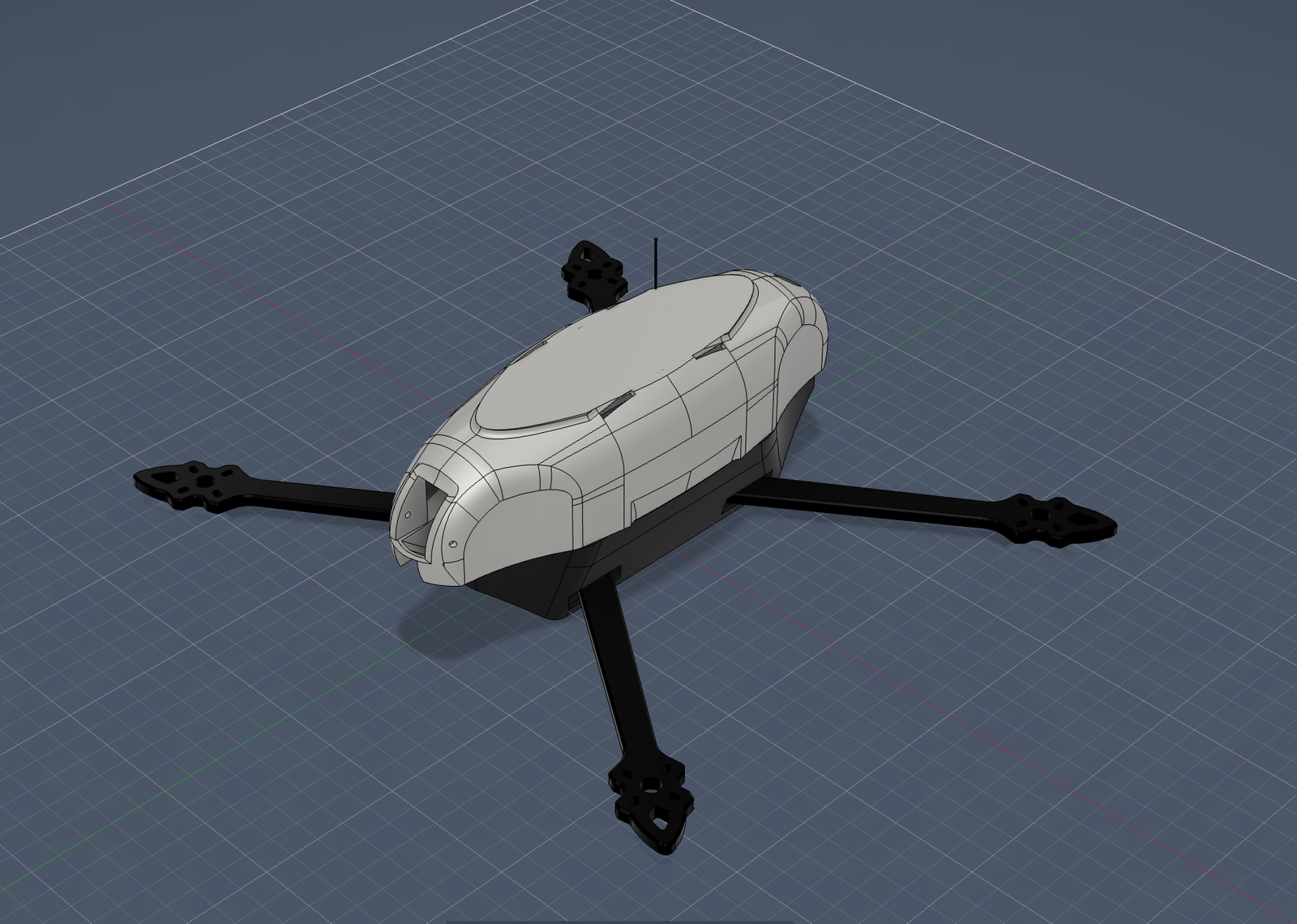
An illustration drawn for this page. It is not a CAD model or a production design, and does not show how the real hardware is built inside.
What we do
The layer where subsystems become a product.
Integration means making separately specified parts work as one machine: microcontrollers and computers, sensors and actuators, the communication between them, the power system, the control logic and the controls a person uses to operate it.
Most of the trouble happens where mechanical, electrical and software work meet, and that is where we work. Robotic arms, mobile and assistive mechanisms, underwater vehicles and aircraft all fail at those boundaries more often than inside any one discipline.
How we work
Interfaces defined before subsystems are built.
Integration problems are nearly always interface problems: a protocol that was assumed and never agreed, a supply rail sized for steady running but not for switch-on surge, a tolerance that was fine on two parts and not on a stack of five. Defining the interfaces at the architecture stage is the cheapest work on any project.
We specify communication and control for the conditions the machine will meet: which bus and how it is wired, update rates, timeouts, fault behaviour, and what happens when a subsystem stops answering. Behaving sensibly when something fails has to be designed in.
We test the assembled machine, checking behaviour, communication and data flow before it goes into use. Testing each part on its own is not enough, because the assembled machine is what fails.
What you get
Deliverables.
Working, integrated hardware and the interface documents that make it maintainable: bus and protocol definitions, message formats and rates, the power layout with a budget for each rail, and how each link behaves on a fault or timeout.
Firmware comes with its source code, build instructions and the settings tuned during commissioning, so the machine can be rebuilt, or a second one set up, without working the settings out again.
Testing covers the whole system: communication, data flow from end to end, and what happens when a subsystem is removed or stops responding.
Applications
Where this work applies.
- Robotic arms and motion-control systems
- Underwater vehicle control and instrumentation
- UAV avionics and payload integration
- Industrial automation and machine control
- Assistive and exoskeleton mechanisms
Related services
Often hired together with this.
Request a quotation
Tell us about the work.
Send the scope, the environment it has to work in and your timeline. We reply within one working day.
Discuss this workSee all services
Or call +91 97028 20020.