Flight
The payload, constraints and design of a six-motor defence UAV.
Read the hexacopter case study
Engineering portfolio
Defence electronics, naval cable assemblies, drones, data loggers, robotic arms and custom mechanical parts. Some we designed from scratch, some we reverse-engineered, and all of them were tested against a written requirement.
Selected work
Each one started with a written requirement: restore an unreliable airborne data logger, build a payload-carrying UAV for defence trials, recover the drawings for an assembly nobody had documented. Each links to the full account of what was asked for, what we did and what was delivered.
Customers are named where they have agreed to it. Where they have not, the work is described without identifying them.
Defence trials, naval equipment, airborne instrumentation, Indian-made replacements for imported parts, and the engineering documents that go with them.
Cable assemblies
Flask and turbine cable assemblies for submarine and torpedo systems had always been imported. We reverse-engineered them and redesigned them for Indian manufacture: CAD models, material sourcing and assembly planning. Testing covered pressure, insulation resistance and durability cycling.
Application Submarine and torpedo systemsQualification Pressure, insulation resistance, durability cyclingView project →Data acquisition
A quadcopter and its electromagnetic data logger came in for repair with unreliable GNSS, ground station link and time synchronisation. We analysed, reconfigured and tested the system until positioning was stable and the modules kept correct time. It went back to collecting data.
Customer Indian NavyOutcome Restored to operational data collectionView project →Defence UAV
A hexacopter for defence fuze-height simulation, with six motors for payload capacity and a margin if one fails. Designed for 10 kg maximum take-off weight, up to 40 minutes in the air and about 2 km range, with waypoint navigation, altitude hold, return-to-home and encrypted two-way communication.
Maximum take-off weight 10 kgEndurance Up to 40 minutesOperating range Approximately 2 kmView project →Data acquisition
An airborne logger recording RTD and thermocouple channels together with IMU, pressure and temperature sensors, with a program to view and review the data. It samples at up to 500 times a second, works down to −40 °C and weighs under 100 g.
Sensors RTD, thermocouple, IMU, pressureSampling rate Up to 500 samples per secondOperating temperature Down to -40 °CView project →Cable assemblies
Cable casings, flanges and couplings on a ship's communication system had no drawings. We studied the parts to recover their structure, seals and materials, then produced measurements, CAD models and technical drawings ready for manufacture and fitting.
Application Marine communication systemsDeliverables Measurements, CAD models, technical drawingsView project →Airframes, propulsion, navigation, telemetry and payloads for multirotors built to different needs for endurance, stability and agility.
UAV design
A quadcopter for live aerial monitoring and inspection, with GPS tracking, waypoint navigation and an FPV camera streaming video to the ground station. We balanced it about its centre of gravity, then tested stability, control response, video quality, interference, latency and vibration.
Navigation GPS position tracking and waypointsPayload FPV camera with live downlinkView project →UAV design
A 7-inch quadcopter frame whose enclosed fuselage protects the flight controller, power board and wiring. X-configuration arms keep it stable, and each round of testing improved the balance between strength and airflow around the electronics.
Class 7-inch quadcopterLayout X-configuration arms, enclosed fuselageView project →UAV design
A 5-inch and a 7-inch multirotor built side by side, so the trade between agility and endurance could be measured. The 5-inch was tuned for response, the 7-inch for efficiency, endurance and a steady payload. Propulsion and centre of gravity were settled first, then flight time, response and stability were tested.
Classes 5-inch and 7-inch multirotorFocus Agility against endurance and payloadView project →Robotic arms, mobile manipulators, assistive robotics, custom tooling and battery-powered machines, from kinematics to control.
Robotics
A six-axis arm on a mobile platform, driven together with the vehicle as one system. A MATLAB App Designer panel gives the operator live control of each joint angle while watching the arm move.
Degrees of freedom SixControl interface MATLAB App DesignerView project →Robotics
Mechanical design of a six-axis arm for controlled industrial motion, balancing joint torque, payload and reach against what could be made and bought. The work covered servos, encoders, control electronics, structural locks, and making or sourcing the precision parts.
Axes SixScope Design, fabrication and procurementView project →Robotics
Ongoing work on the control system for an upper-limb assistive exoskeleton. MATLAB generates the joint commands, which are checked in kinematic and control simulation with live visualisation. Fitting the hardware and adding sensor-based control, possibly from EMG, come next.
Status OngoingValidation MATLAB kinematic and control simulationView project →Mechanical design
Detailed 3D models and manufacturing drawings for custom tools and components, complete enough for a vendor to quote and build without calling about every dimension. We also ran the vendor quotations for material, fabrication and delivery. The job was design and documentation; the vendor did the manufacturing.
Deliverables 3D models, manufacturing drawings, RFQ packagesView project →Mechanical design
A battery-powered automatic trolley that had to carry a real load over uneven ground outdoors, so the chassis was as much a structural job as a control one. We designed the chassis, bought the materials, brought the mechanical and electrical work together and built it.
Scope Chassis design, procurement, assemblyView project →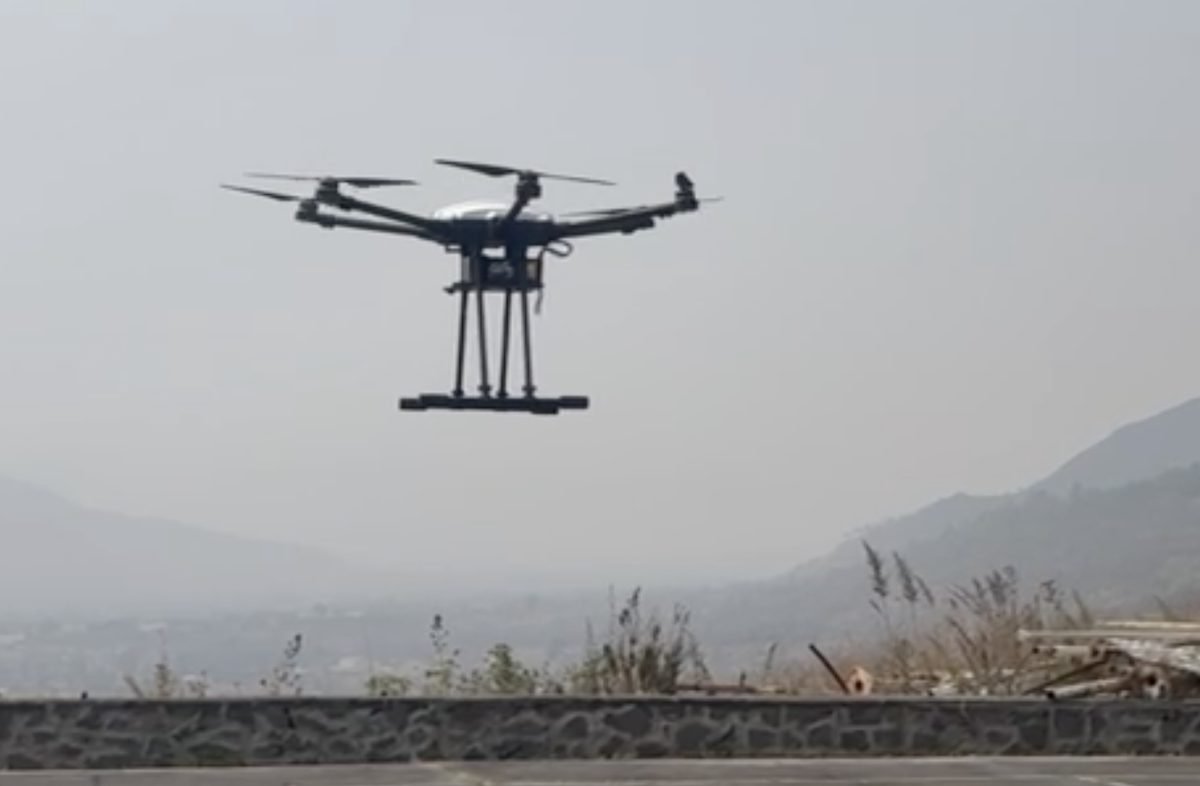
An illustration drawn for this page. It is not a CAD model or a production design, and does not show how the real hardware is built inside.
Three projects in depth
Six motors, for more payload than a quadcopter and a margin if one fails.
Structure, power and control as one aircraft. The cover lifts to show where the avionics sit.
The figures from the ARDE hexacopter case study, which has the full write-up.
Continue into the work
The payload, constraints and design of a six-motor defence UAV.
Read the hexacopter case studyHow we turned undocumented parts into drawings and new parts ready to make.
Read the naval hardware projectSix joints, a mobile base and one control panel.
Read the robotic arm projectIn development
Work we are developing for future autonomous platforms. None of it is finished or fielded yet.
Next step
Defence electronics, unmanned platforms, data acquisition, cable assemblies or reverse engineering. Send the requirement and we will tell you what it takes.
Need the parts rather than a build? They are in our shop at vebixautomation.com.